
Blog
Safety switch keeps tripping? What it means and what to do
8 November 2026
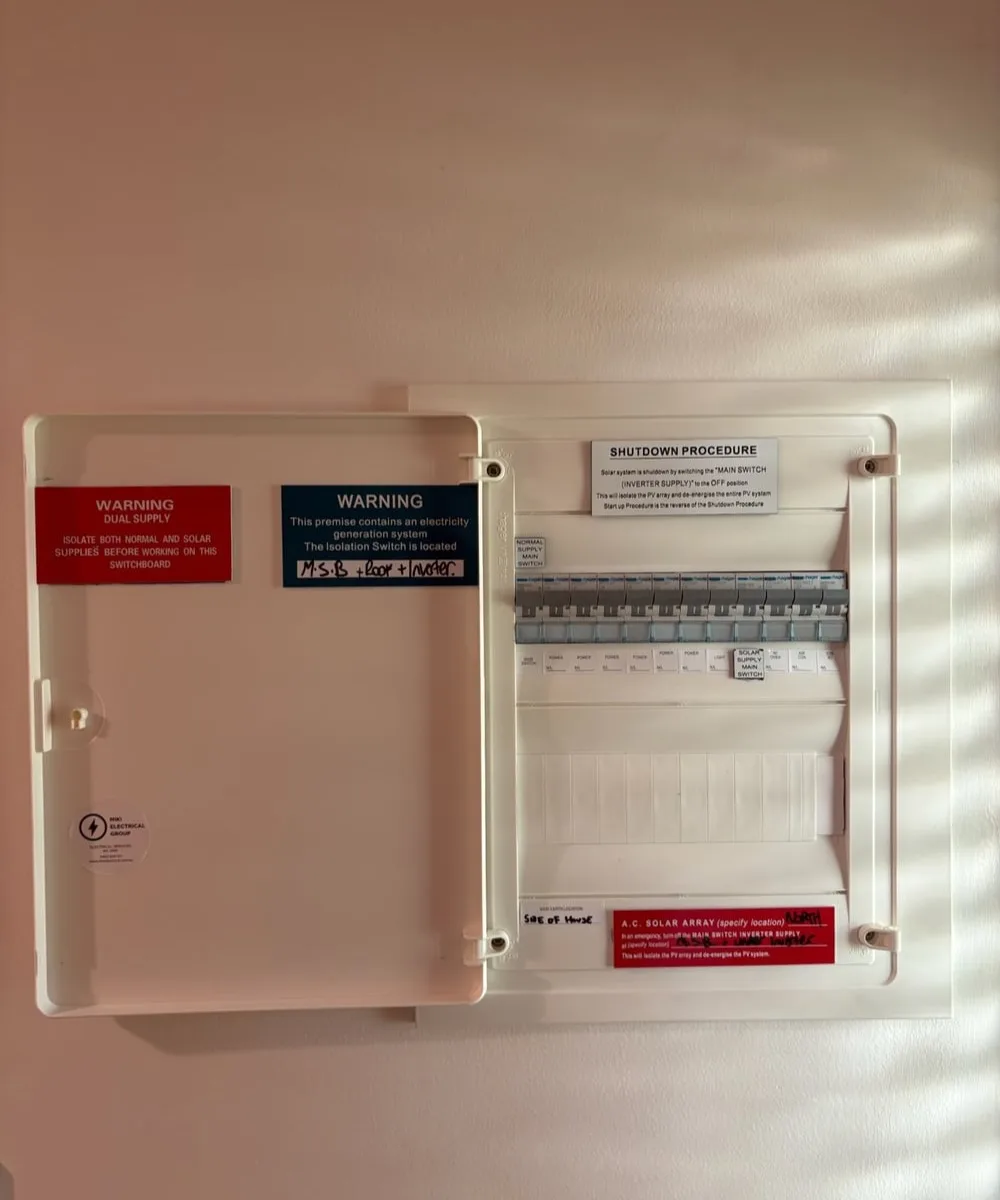
A safety switch that keeps tripping is one of the most common calls we get, and one of the most misunderstood. The instinct is to treat the switch as the problem. Almost always it is the other way round. The safety switch is working, and it is telling you something on that circuit is not.
Here is what it is actually detecting, how to narrow down the cause without opening anything up, and the point where it stops being a reset and becomes a job for a licensed electrician.
What a safety switch is actually doing
A safety switch, also called an RCD, compares the current going out on a circuit with the current coming back. If the two do not match, some of it is leaking to earth, through a damaged cord, a wet fitting or a person. The switch cuts the power within milliseconds.
That is a different job to a circuit breaker. A breaker protects the wiring from carrying more current than it should, from an overload or a short circuit. A safety switch protects people from electric shock. On a lot of newer boards the two are combined into one device per circuit.
An easy way to tell them apart on most boards: a safety switch has a small button marked T or Test. A plain circuit breaker does not.
Tripped once, or keeps tripping?
A single trip with an obvious cause is not much to worry about. A storm, a kettle with water in the base, a power tool with a nicked lead. Unplug the suspect, reset the switch once and carry on.
A safety switch that keeps tripping is different. The fault is still there. Resetting it again and again does not clear anything, it just keeps reconnecting power to whatever the switch is trying to disconnect. If it trips a second time, leave it off.
The usual causes
In the older houses that make up so much of Coburg and the rest of Melbourne's inner north, the same handful of causes come up again and again.
- A faulty appliance. Fridges, freezers, washing machines, kettles and anything with a heating element are the usual suspects. Insulation inside an appliance breaks down with age, and the leakage often gets worse as it warms up.
- Moisture. Outdoor power points, garden lights, a shed, or a bathroom or laundry fitting. If the tripping started after rain, water is the first thing to rule out.
- Damaged cabling. A screw through a cable during a renovation, rodents in the roof, or original wiring whose insulation has broken down over the decades.
- Too much on one safety switch. Older boards often have one safety switch covering several circuits. Every appliance leaks a tiny amount, which is normal, but add enough of them together and the switch can trip without any single thing being faulty.
- A failing safety switch. It happens, but it is the least likely of the lot. Replacing the switch without finding the cause is how people end up paying twice.
Read the pattern before you ring
When the switch trips is often more useful than the fact that it trips. Before you call anyone, take note of:
- whether it happens after rain or in damp weather
- whether it happens at a particular time, such as overnight or early in the morning
- whether it lines up with one appliance being switched on
- which circuits go dead when it trips
Overnight trips with nobody using anything often point at something that runs on its own, like a fridge, a freezer or a hot water system on an off-peak timer. Trips after rain point outside. Trips the moment the kettle goes on point at the kettle.
A clear description like that, plus a photo of your switchboard, often lets an electrician narrow things down on the phone before anyone drives anywhere. If the trips come with lights dimming or flickering, our article on why lights keep flickering covers that side of it.
What is safe to try yourself
None of this involves opening anything up. It is the same first check an electrician would make, done from the outside.
- Unplug everything on the circuits that went dead. If you are not sure which those are, unplug everything you can reach.
- Reset the safety switch once.
- If it holds, plug things back in one at a time, waiting a minute or two between each. If it trips as something goes back in, that appliance is the likely cause. Leave it unplugged and have it checked before you use it again.
- If it trips again with nothing plugged in, the fault is in the fixed wiring or a fitting. Leave it off and call a licensed electrician.
Do not open the switchboard, take covers off fittings, or try to bypass the switch. If you can smell burning, see scorch marks, or there is water near the board or a fitting, turn the main switch off if you can do that safely and ring. If there is smoke or flame, ring 000 first.
When to call an electrician
- It trips with everything unplugged
- It will not reset at all
- It keeps tripping and you cannot link it to an appliance
- You can smell burning, hear buzzing, or see scorch marks
- Water has got into a fitting, a power point or the switchboard
Finding the fault is the actual job. An electrician isolates each circuit and tests the insulation on it, which shows where the leakage is rather than guessing. Replacing a part is the easy half.
When the answer is the switchboard
Sometimes the fault finding ends at the board itself. If yours still has ceramic fuses, has one safety switch covering most of the house, or has no room left for another circuit, the lasting fix is often a switchboard upgrade that splits the protection, so a fault on the outdoor lights no longer takes the fridge out with it.
Energy Safe Victoria notes that safety switches are now compulsory on new residential installations, but plenty of older homes in the inner north were wired long before that. Rentals are a separate case. The rental minimum standard that commenced on 29 March 2023 requires modern switchboards with circuit breakers and safety switches, and the two-yearly safety check now applies to every rental agreement.
Test it before it matters
Energy Safe Victoria recommends testing your safety switches regularly. Let everyone in the house know first, then press the test button on each one. The power on that circuit should go off. Reset it once you have confirmed it did.
If the power stays on when you press test, the safety switch may have failed. Energy Safe's advice is to call a licensed electrician straight away. An electrical safety inspection covers the switchboard and safety switches along with everything else.
If you are in Coburg or nearby
We are based in Coburg and take emergency calls around the clock across Melbourne's inner north. If your safety switch will not stay on, ring our emergency electrician in Coburg rather than emailing. You get the cost of attending and diagnosing before we come out, and we will tell you honestly what the wait looks like rather than promising a time.
If it can wait for a booked visit, see what we do as a local electrician in Coburg and across the suburbs around it.
Safety switch testing guidance is from Energy Safe Victoria. The rental minimum standard is set out by Consumer Affairs Victoria.
Get in touch
Safety switch will not stay on?
If it trips with everything unplugged, or you can smell burning, ring rather than using the form. For anything that can wait, tell us which circuits go off and when it happens.
- Call or text
- 0492 949 017
- Based in
- Coburg VIC 3058
- Licence
- REC 35681