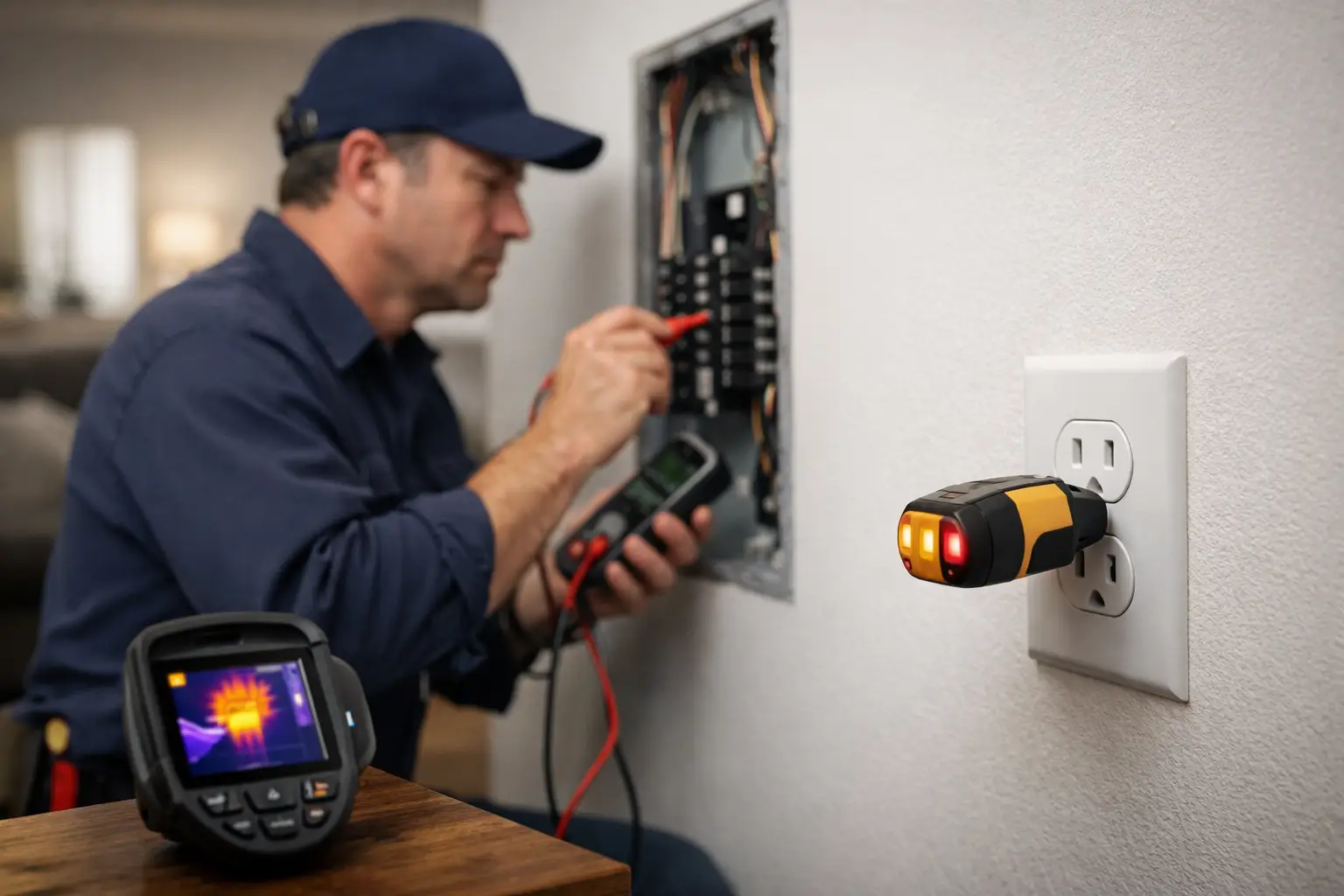
A flickering light or power point that feels warm might seem like a small annoyance, but these can be early signs of an electrical fault behind the wall. An electrical safety inspection gives you a clear picture of what is working safely, what needs attention and where a small repair could prevent a much bigger problem.
For homeowners across Coburg, Preston, Brunswick and wider Melbourne, inspections are particularly worthwhile in older properties, recently purchased homes, renovations and rentals. Electrical systems do not last forever, and many homes have had additions, repairs or DIY alterations over the years that may not suit the way a household uses power today.
What a home electrical safety inspection checks
A professional inspection is more than a quick look at the switchboard. A licensed electrician assesses the condition, operation and safety of the electrical installation, then explains any issues in plain English. The scope can vary with the property's age, layout and known concerns, but it commonly covers the switchboard, safety switches, circuits, wiring, power points, lighting and fixed electrical appliances.
The electrician will look for visible damage, ageing components, loose connections, overloading risks and signs of previous work that may need correction. They may also test safety switches, check earthing arrangements and assess whether the switchboard has the protection needed for a modern household.
Older Melbourne homes can need closer attention. A period house in Brunswick or Coburg may have original or partially updated wiring, while a renovated property may combine new circuits with older electrical infrastructure. Neither situation automatically means there is a problem. It does mean the system should be checked as a whole rather than assuming a new kitchen or freshly painted room reflects what is happening behind the walls.
Why inspections are worth arranging
Electrical faults are not always obvious. Wiring can deteriorate inside ceilings and wall cavities, connections can loosen over time, and a circuit may be asked to carry far more than it was designed for. Modern homes often run induction cooktops, air conditioners, home offices, EV chargers, entertainment systems and multiple chargers from electrical systems installed decades earlier.
An inspection helps identify issues before they become an outage, electric shock risk or fire hazard. It also gives homeowners practical advice about upgrades that suit their property and budget. Sometimes the answer is a straightforward repair. In other cases, a switchboard upgrade, additional circuit or partial rewiring is the safer long-term option.
There is a balance to consider. Not every older component needs replacing immediately, and an inspection should not turn into unnecessary work. A capable electrician will prioritise urgent safety concerns, explain recommended improvements and distinguish between repairs needed now and sensible planning for later.
Signs your home should be checked sooner
You do not need to wait for a major fault before booking an inspection. It is sensible to arrange one if you notice:
- Repeated tripping or breakers that will not stay on
- Buzzing sounds or burning smells
- Power points that are cracked, loose or warm during use
- Lights that regularly flicker or dim, particularly when appliances start
- Relying heavily on extension leads and power boards
- A shock or tingle from an appliance
- One part of the home frequently losing power
An inspection is also a good idea when you have bought an established property, are planning a renovation, or want to install high-demand equipment such as an electric oven, air conditioning or EV charger. Checking capacity and protection before the work starts can prevent delays, avoid overloads and help the project run properly from the beginning.
Safety switches and switchboards deserve close attention
Safety switches, also known as RCDs, are designed to quickly cut power when they detect a fault that could cause an electric shock. They are a critical layer of protection, but they must be installed correctly, operating properly and suitable for the circuits they protect.
A home may have some safety switch protection without having it across all required circuits. Older fuse boards and dated switchboards can also make fault-finding harder and may not provide the level of protection expected in a modern installation. During an inspection, the switchboard should be assessed for condition, labelling, circuit protection and any signs of overheating or poor past workmanship.
Testing the test button on a safety switch is a useful household habit, but it is not a replacement for professional testing. If a safety switch will not reset, trips repeatedly or you are unsure what it protects, leave it off where practical and arrange a licensed electrician to investigate.
Inspections for landlords and rental properties
Rental properties have specific obligations, and electrical safety checks are not simply a matter of good maintenance. In Victoria, rental providers must arrange an electrical safety check every two years, carried out by a licensed electrician. Records should be retained, and any identified safety issues need appropriate attention.
For landlords and property managers, staying ahead of the due date helps avoid rushed bookings and gives tenants confidence that the property is being maintained responsibly. A proper check can identify damaged outlets, inadequate protection, ageing switchboard components and faults in fixed wiring before they create disruption or risk.
Tenants should report electrical concerns promptly rather than attempting a repair themselves. A damaged socket, tripping circuit or unusual electrical smell needs professional assessment. Electrical work, including alterations to wiring and power points, should always be completed by a licensed electrician.
What happens during the visit
Before starting, the electrician should ask about the home, recent electrical problems, planned improvements and any areas of concern. This helps focus the inspection where it matters most. Access to the switchboard, power points, lights and relevant rooms is useful, so it is worth clearing a path where possible.
Some testing may require individual circuits or power to be switched off briefly. The electrician should let you know before this happens and work to minimise disruption. In a home office, for example, it may be better to schedule the inspection outside key work hours if devices need to be shut down.
Once checks are complete, you should receive a clear explanation of the findings. If repairs or upgrades are recommended, ask what the risk is, whether the work is urgent and what options are available. Good advice is specific to the property. A family home with a new kitchen has different needs from a compact unit, a heritage terrace or a rental portfolio.
Simple habits that support electrical safety
A professional inspection is the right place to start, but daily habits also matter. Avoid overloading power boards, replace damaged leads, keep chargers and electrical equipment away from water, and never run leads under rugs where heat and damage can go unnoticed. Use appropriately rated equipment outdoors and keep switchboards accessible rather than storing items in front of them.
Be cautious with older appliances too. If a device has a damaged cord, exposed wiring, a loose plug or causes a safety switch to trip, stop using it until it has been checked, repaired or replaced. The same applies to an appliance that gives off a burning smell or feels unusually hot.
Plan before small faults become major jobs
Electrical safety is easier to manage when it is treated as regular property maintenance rather than an emergency response. A timely inspection can give you confidence in your home, support a renovation plan and provide a practical list of priorities without unnecessary pressure.
If you are concerned about your wiring, switchboard or safety switches, we can assess your home and explain the next steps clearly. Getting a local licensed electrician involved early is one of the simplest ways to keep your electricals in shape and your household protected. Ring us on 0492 949 017 or send an enquiry.
Get in touch
Due for a safety inspection?
Ring for the quickest response. We explain what we find in plain English, no pressure to do work you do not need.
- Call or text
- 0492 949 017
- Based in
- Coburg VIC 3058
- Licence
- REC 35681