
Blog
House rewiring cost Melbourne: What to expect.
12 August 2026
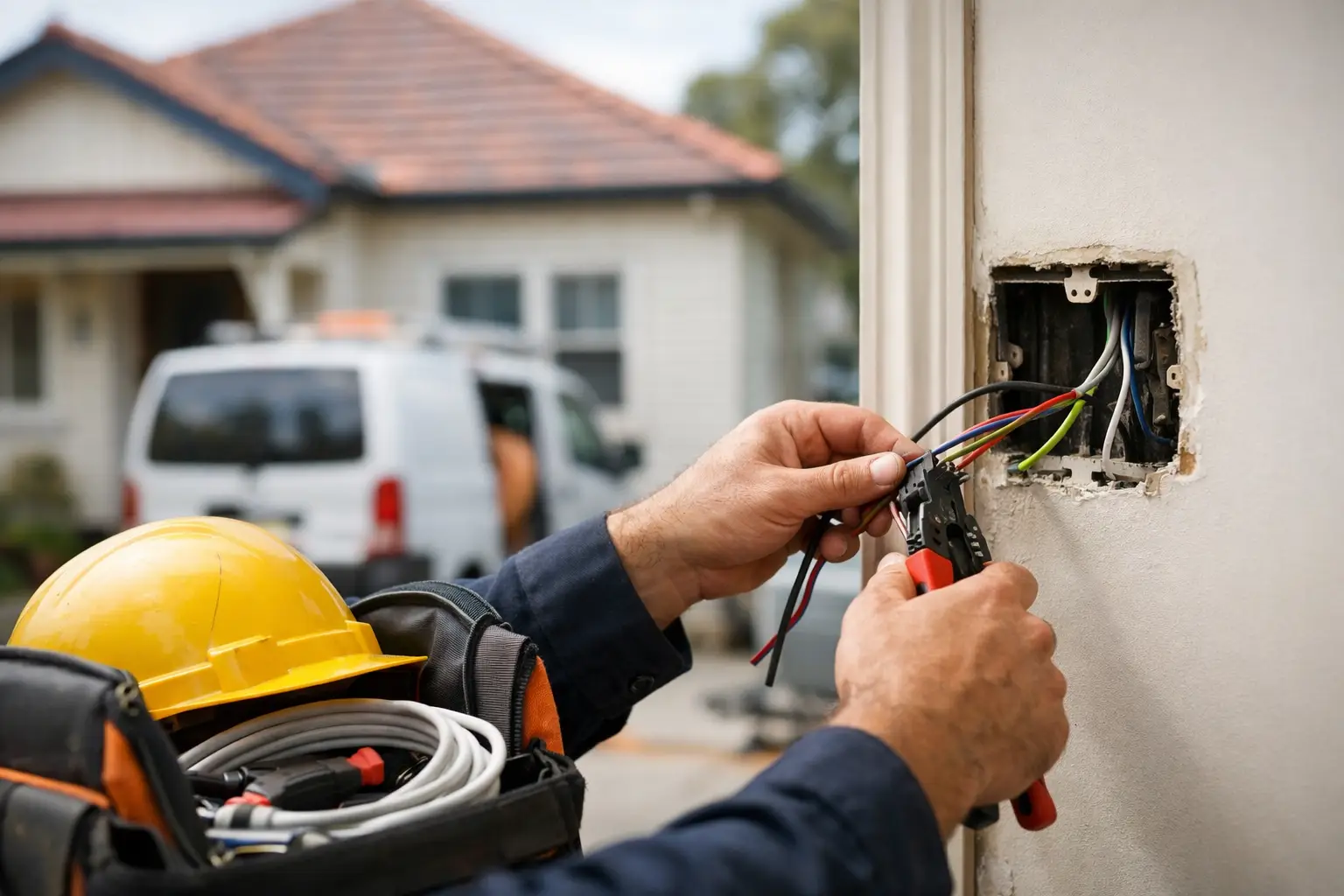
A flickering light, a warm power point, a breaker that keeps tripping. In an older Melbourne home these are rarely just an annoyance. They are usually signs that the wiring behind the plaster has had its day, and the first question everyone asks is what it will cost to fix.
Rewiring is not a one-price job. A compact weatherboard in Coburg, a double-storey terrace in Brunswick and a renovated family home in Preston can all need very different amounts of labour, materials and access work. A proper quote reflects the condition and layout of your actual property, not a guess based on the number of bedrooms.
What does house rewiring cost in Melbourne?
As a broad guide, partial rewiring, where only a damaged circuit or one section of the house needs attention, may start from around $3,000 to $8,000. A full rewire for a smaller home commonly sits between $12,000 and $20,000. A three-bedroom established home typically ranges from $18,000 to $35,000, and larger properties with difficult access, heritage features or major switchboard work can go higher.
These are ballpark figures only. Material costs change, every property is different, and the only way to get an accurate number is an on-site assessment. What matters is that the quote sets out exactly what will be replaced, how many points and circuits are included, whether the switchboard is part of it, and what allowance has been made for patching walls and ceilings afterward.
Why older Melbourne homes often cost more
Melbourne's inner north has a mix of period terraces, post-war brick veneer, older flats and extensions added at different times. That character is part of the appeal, but it makes electrical work less straightforward.
Many of these homes still have ageing cable insulation, old fuse boards and not enough circuits or power points for how people actually live now. Modern households run heating and cooling, induction cooktops, dishwashers, home offices, entertainment systems and EV chargers. The electrical systems in a 1920s terrace were never designed for that load.
Previous renovations complicate things further. A house might have original wiring in the front rooms, newer wiring in a back extension, and undocumented alterations in between. Before quoting, a licensed electrician needs to inspect the switchboard, accessible roof and subfloor spaces, and existing circuits to work out what can stay and what has to go.
The main factors that change a rewire quote
House size matters, but access and complexity usually have a bigger effect on price than square metres.
Access to cables and wall cavities
Electricians need safe pathways to run new cables from the switchboard to every light, switch and power point. A roof cavity and underfloor space make this relatively clean. Solid brick walls, concrete floors, flat roofs, tiled areas and ornate plasterwork all mean more labour, more cutting and more patching.
A full rewire usually involves some access holes. It is worth clarifying up front who is responsible for plaster repairs and repainting, because electrical quotes do not always include those trades.
Switchboard upgrades
Rewiring usually goes hand in hand with a switchboard upgrade. Old ceramic fuses and overloaded boards need to be replaced with modern circuit protection and safety switches on every circuit. This adds to the upfront cost, but it gives the home better circuit separation, makes faults easier to find, and supports future additions like air conditioning, solar or an EV charger without relying on circuits that are already at their limit.
Number of circuits and points
A like-for-like replacement of existing wiring costs less than a full electrical redesign. But if you are opening walls anyway, it is usually worth adding power points where people actually need them, running dedicated circuits for appliances, and planning for things you might add later. Doing it during a rewire is far cheaper than coming back to open finished walls.
Occupancy and timing
A vacant house is quicker and easier to rewire than an occupied one. Furniture, pets, family routines and the need to keep parts of the home operational all affect how the work is staged. It can be done while you are living there, but there will be planned power outages and rooms you cannot use for short periods.
If you are renovating, coordinating the electrical work with demolition, plastering and cabinetry reduces rework. For landlords, scheduling between tenancies is usually the cleanest option.
What a full rewire should include
Every property is different, but a comprehensive rewire typically includes removal or isolation of old redundant wiring, new cabling and circuits, new switches and power points, lighting connections, smoke alarm wiring, switchboard upgrades and testing of the completed installation.
It may also include data cabling, TV points, security camera cabling and outdoor lighting. These are not always part of a standard rewire, so they should be identified in the quote rather than assumed.
The completed work must be tested, compliant and supported by the appropriate electrical certification. If the house contains suspected asbestos in eaves, wall linings or vinyl flooring, that needs to be managed carefully. Electrical work should not disturb asbestos-containing materials without the correct assessment and controls.
Signs it may be time to discuss rewiring
Not every old home needs an immediate full rewire. A licensed inspection can determine whether a targeted repair, an extra circuit, a switchboard upgrade or a staged approach is the sensible option. But there are warning signs that deserve prompt attention:
- Frequent circuit tripping
- Burning smells or discoloured outlets
- Buzzing switches or warm power points
- Shocks or tingles from appliances
- Lights that flicker without an obvious cause
- Loose fittings or cracked sockets
It is also worth getting advice before a major kitchen renovation, bathroom upgrade or appliance change if the existing electrical installation is old. New appliances can expose limitations in circuits that have been coping only because the home previously had lower demand.
Getting a quote you can rely on
For an accurate quote, arrange an on-site assessment rather than relying on an online estimate. Share your renovation plans, point out any recurring faults, and explain how you use each room. A clear discussion gives your electrician the chance to recommend practical options that suit the home and your budget.
Ask whether the quote includes the switchboard, new fittings, smoke alarms, data or security cabling, certification, disposal of old materials and any required access work. If parts of the work are optional, have them priced separately so you can make informed decisions without compromising essential safety work.
If your home is showing its age electrically, booking an inspection before the next renovation stage or appliance upgrade gives you a clearer plan, a more accurate budget, and confidence that the work will be done safely. Ring us on 0492 949 017 or send an enquiry and we will talk you through it.
Get in touch
Need a rewire quote?
Ring for the quickest response. If it is easier to write it down, this comes straight through to Maz.
- Call or text
- 0492 949 017
- Based in
- Coburg VIC 3058
- Licence
- REC 35681