
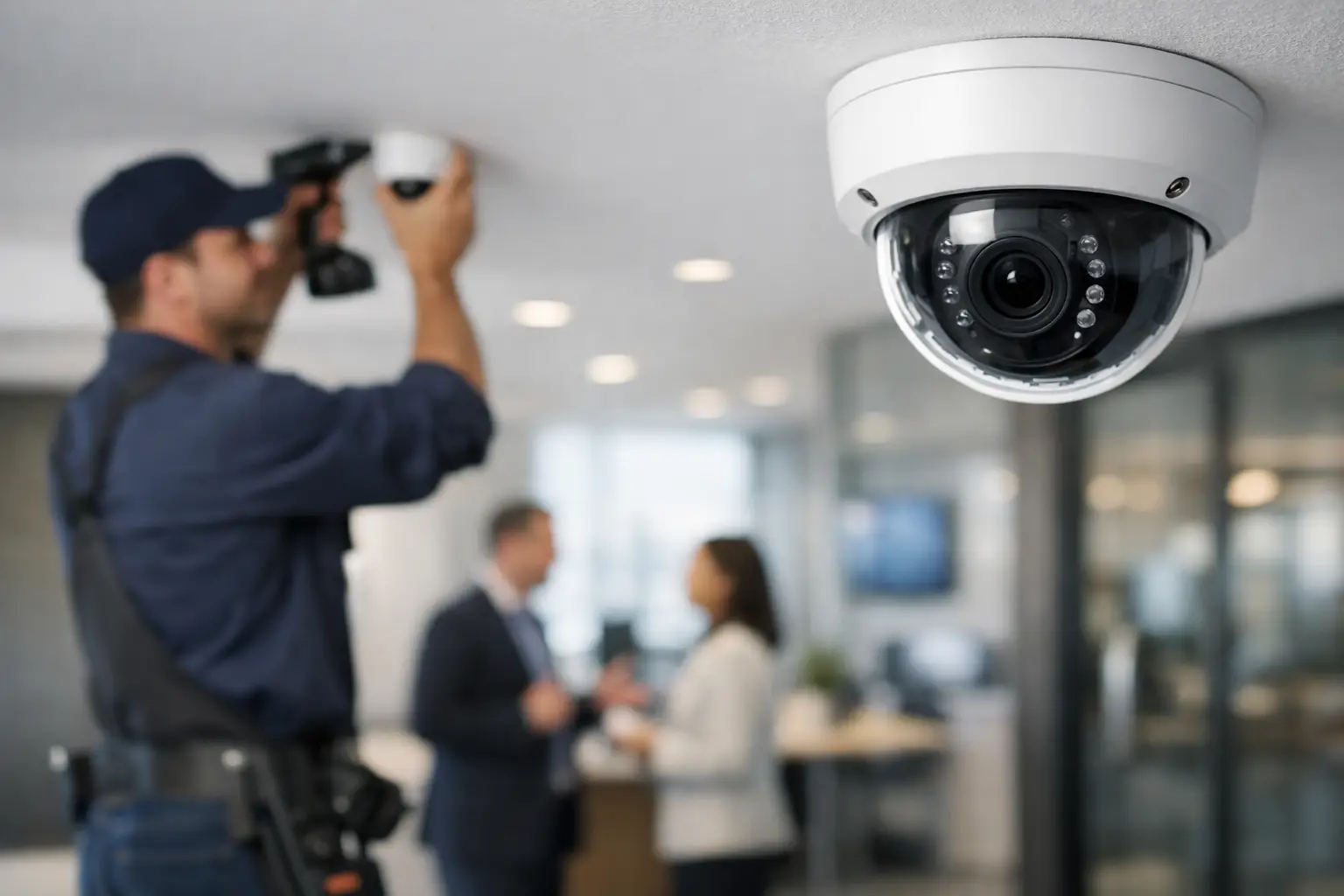
A camera mounted above the front door will not necessarily protect the areas that matter most. For many local operators, effective CCTV installation starts with understanding how people, stock, vehicles and staff actually move through the premises, then designing coverage around those points.
Whether you run a shop in Coburg, manage an office in Preston, operate a warehouse in Brunswick or look after several commercial properties across Melbourne, CCTV should give you useful evidence and everyday confidence. It needs to record clear footage when it is needed, discourage opportunistic theft and fit the way your business operates without creating unnecessary disruption.
Start with the risks, not the camera brand
The right system depends on the property and the risks you are managing. A small retail store may need clear views of entry points, the counter and high-value displays. A cafe may need coverage of rear access and cash-handling areas. An office could be more concerned with after-hours entry, visitor access and equipment rooms, while a workshop or warehouse may need wide external views of gates, loading areas, car parks and stock zones.
Walk the site before deciding on camera locations. Look for blind spots, poorly lit areas, secondary doors, laneways, shared access points and places where people can enter or leave without being seen. Consider what you would need to identify if an incident occurred: a face, a number plate, a package, a vehicle direction or the sequence of events.
This is why more cameras are not always the answer. A poorly positioned camera can create hours of footage without capturing a recognisable image. A smaller, properly planned system often delivers better results than cameras placed simply where cabling is easiest.
Plan coverage in layers
Coverage should be planned in layers. Exterior cameras monitor approaches to the building, gates and parking areas. Cameras at entrances record who comes and goes. Internal cameras protect customer-facing spaces, storage rooms, corridors or points where valuable equipment is kept.
Camera height and viewing angle matter. Mounting a camera too high may provide a broad overview but make faces difficult to identify. A camera pointed towards bright glass doors or afternoon sun can struggle with glare. At night, a camera's infrared capability and the surrounding lighting both affect the image it captures.
For exterior areas, weather-rated equipment and carefully protected cabling are essential. In older northern-suburbs properties, existing building materials, ceilings and access paths can influence what is practical. A licensed electrician can assess these details early, plan cable routes neatly and avoid leaving exposed wiring or relying on unsuitable power arrangements.
Lighting and CCTV work better together
Good lighting supports clearer footage, safer movement around the site and a more visible deterrent after hours. Motion-sensor lighting can be useful around rear doors, bins, side passages and car parks, but it should be positioned so it helps the camera rather than causes glare.
Lighting alone is not a substitute for a camera system, and cameras cannot always compensate for dark, uneven areas. Looking at both together produces a more reliable result. It may also reveal other practical improvements, such as repairing a faulty exterior fitting or adding security lighting around a staff entrance.
Choose recording and remote access carefully
Most modern commercial CCTV systems record to a network video recorder, with some also offering secure remote viewing through a mobile or computer. Remote access can be valuable for business owners and property managers, particularly when checking an alarm event or looking in on an empty site. It also needs to be set up properly.
Weak passwords, shared logins and poorly configured remote access can create a security risk of their own. Access should be limited to the people who genuinely need it, with strong unique passwords and permissions that match each person's role. If staff responsibilities change, access should be reviewed promptly.
Storage requirements depend on the number of cameras, the resolution, recording settings and how long footage needs to be retained. Continuous high-resolution recording uses more storage than motion-based recording, but motion recording can miss context if settings are too sensitive or too restrictive. There is no single retention period that suits every business. The right approach depends on the type of incidents you need to investigate, your operational needs and any industry or insurance requirements.
Internet reliability is also worth considering. A system can continue recording locally during an internet outage if it has appropriate local storage, but remote viewing will not work until the connection is restored. For businesses adding CCTV alongside data cabling, networking equipment or NBN improvements, it makes sense to plan these services together rather than treating each one as a separate job.
Privacy is part of a proper setup
Security cameras need to protect the business without unnecessarily intruding on staff, customers, neighbours or the public. Cameras should be aimed at legitimate business areas and not towards private spaces such as toilets, change rooms or neighbouring homes and yards.
Visible signage is generally a sensible part of a commercial CCTV setup. It tells people that surveillance is in use and can strengthen the system's deterrent effect. Your business should also be clear internally about why cameras are used, who can view footage and how recorded material is handled.
Workplace monitoring can involve additional obligations, particularly where cameras record employees. Requirements can vary according to the workplace, agreements and applicable Victorian and Australian privacy rules. If you are unsure, seek specific advice before introducing cameras in staff areas.
Plan for power, cabling and site conditions
A dependable CCTV system relies on more than cameras. It requires safe power, suitable cable routes, sound network connections and a secure place for recording equipment. Running cables through walls, ceilings and roof spaces should be done with care, particularly in occupied shops, offices and older commercial buildings where access may be limited.
In many cases, structured data cabling provides a cleaner and more stable connection than depending entirely on wireless cameras. Wireless equipment can suit certain locations or short-term needs, but distance, interference, building construction and network load can affect performance. For fixed commercial installations, wired connections are often the more dependable choice where they are practical.
The recorder and network equipment should be located in a protected, ventilated area rather than left exposed in a public space. Consider backup power as well. A power interruption can take cameras offline at the moment you need them, so an appropriately sized backup option may be worthwhile for sites with higher security needs.
Keep installation disruption low
Commercial work needs to be organised around trading hours, staff access and customer safety. A well-planned installation begins with a site assessment and a clear discussion about where equipment will go, how cables will be run and whether work needs to occur before opening, after closing or in stages.
For a retail fit-out, this might mean completing overhead work before stock is displayed. In an office, it may involve coordinating access to ceiling spaces and communications racks. At a warehouse, it may mean working around delivery windows, forklifts and loading areas. The goal is to get the system installed safely and neatly without making a busy workplace harder to run.
Test it before you rely on it
Once installation is complete, do not assume every camera is doing its job. Test footage during the day and at night. Check whether faces are clear at entry points, whether external views are affected by headlights or shadows, and whether the recorder captures the relevant areas without gaps.
It is also worth confirming that authorised users can access footage when required and understand the basic process for reviewing or saving an incident. A system that nobody knows how to use under pressure is less helpful than it should be.
CCTV should be maintained like any other part of your commercial electrical and security setup. Lenses get dirty, foliage grows into viewing paths, time settings can drift and network changes can affect remote access. Periodic checks keep small faults from becoming costly blind spots.
A carefully designed CCTV system gives your business more than cameras on a wall. It gives you clearer oversight of the premises, a stronger deterrent and practical support when an incident needs to be understood. Start with a site-specific plan, use licensed workmanship and make sure the finished system suits the way your business works every day.
Get in touch
Planning a CCTV installation?
Ring for the quickest response. We handle CCTV, lighting, data and power together so you deal with one electrician.
- Call or text
- 0492 949 017
- Based in
- Coburg VIC 3058
- Licence
- REC 35681