
Blog
Outdoor Security Lighting Installation in Melbourne
6 August 2026
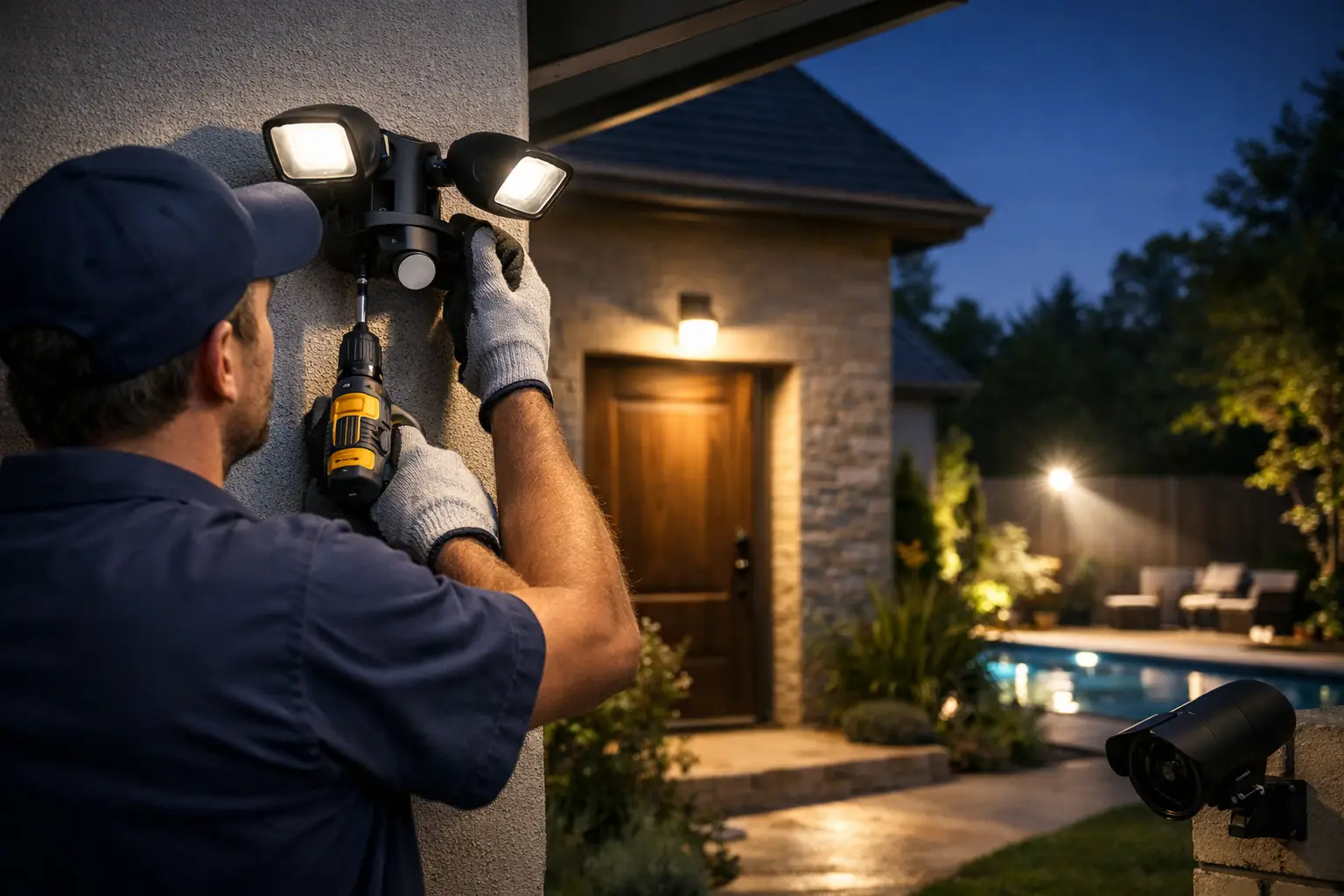
A poorly lit side passage, rear gate or car park is more than an inconvenience when you arrive home late. It can create a genuine safety concern, make access difficult and leave valuable areas of your property out of view. A well-planned outdoor security lighting installation gives you useful light where it is needed, without flooding bedrooms, neighbouring homes or the entire backyard with glare.
For homes, rentals and businesses across Coburg, Preston, Brunswick and wider Melbourne, the right result starts with the layout of the property. The best lighting plan considers how people enter, move around and use the space after dark, then matches the fittings, controls and electrical work to that purpose.
Start with the areas that matter most
Security lighting works best when it supports safe movement and natural surveillance. Rather than fitting the brightest floodlight possible above the garage, look at the points where poor visibility creates risk or frustration.
At a house, this may include the front door, driveway, side access, rear gate, deck steps and bins. For a rental property, landlords and property managers may also need clear lighting around shared paths, letterboxes, garages and external entry points. At offices, shops, workshops and warehouses, car parks, loading areas, staff entrances and waste-storage zones are often the priorities.
Think about what needs to be visible from inside the building or through CCTV cameras. Light can help cameras capture clearer footage, but an incorrectly positioned fitting can also create glare, hard shadows or reflections that reduce image quality. If your property has cameras, lighting and CCTV should be planned together rather than treated as separate jobs.
It is also worth considering where light will shine beyond your boundary. A fitting aimed across a neighbour's bedroom window, a shared driveway or a public footpath can cause problems even when it improves security at your own property. Good placement directs light downwards and towards the area being protected.
Choosing the right type of security light
There is no single fitting that suits every outdoor area. The right choice depends on the size of the space, the mounting location, how often the area is used and whether light is needed continuously or only when someone approaches.
Sensor lights for entrances and side paths
Motion-sensor lights are a practical choice for side passages, driveways, rear doors and gates. They activate when movement is detected, giving you light when arriving home while avoiding unnecessary power use through the night.
The sensor needs careful positioning. If it faces a busy street, swaying branches or a path used by neighbours, the light may turn on repeatedly. On the other hand, a sensor mounted too high or pointed in the wrong direction can miss the area it is meant to cover. Sensitivity, detection range and run time should be adjusted after installation to suit the site.
Dusk-to-dawn lighting for consistent visibility
Photocell-controlled fittings switch on as daylight fades and off again in the morning. They suit front entries, building signage, common areas and commercial premises where predictable overnight lighting is more useful than occasional sensor activation.
This option uses more energy than a sensor-only setup, but modern LED fittings keep operating costs manageable. It can also be the better choice where continuous light improves access, discourages unwanted activity or supports camera coverage.
Floodlights and directional fittings
LED floodlights are effective for broad areas such as driveways, backyards, car parks and loading bays. Their output must match the space. An oversized floodlight can be uncomfortable to look at and may create deep shadows beyond its beam, while an undersized fitting leaves important corners dark.
Directional wall lights, bollards and path lights can be better for walkways and landscaping. They provide lower-level illumination that helps people see where they are walking without making the property feel overlit. In many cases, a combination of modest pathway lighting and targeted sensor lighting gives a more useful result than one powerful floodlight.
Why professional installation matters
Outdoor electrical work is exposed to rain, heat, dust, insects and physical damage. Fittings, cable routes, connections and mounting points all need to be selected and installed for the conditions they will face. A light that looks fine on the day it is fitted can become unreliable or unsafe if water enters a poorly sealed connection or if the cable has not been adequately protected.
A licensed electrician can assess the existing circuit, confirm whether there is suitable capacity and install the required switching, sensors and protective equipment correctly. This is particularly relevant for older homes in Melbourne's northern suburbs, where previous renovations may have left behind ageing wiring, limited circuit capacity or outdoor fittings that no longer meet current expectations.
Professional installation also avoids the common shortcuts that cause trouble later: running unsuitable cable externally, mounting fittings to unstable surfaces, placing lights where they are easily damaged, or tapping into wiring without proper protection. The aim is not simply to make the light turn on. It is to create an installation that is safe, compliant, weather-resistant and straightforward to maintain.
Plan around your property
Off-the-shelf security-lighting kits can be useful, but they do not account for every property. A terrace in Brunswick, a family home in Preston and a commercial site in Coburg can have very different access points, mounting surfaces and lighting needs.
Before work starts, consider where power can be supplied from and whether the route will require cables through walls, roof spaces, underground sections or external conduit. At renovation or new-build stage, security lighting can be incorporated into the broader electrical plan so controls, cameras, garden lighting and outdoor power points work together cleanly.
For established properties, the electrician may recommend working with existing circuits where appropriate or installing a new circuit if the load and layout call for it. The neatest option is not always the cheapest upfront option, but it can reduce future repairs and produce a better-looking finish.
Businesses should also think about staff use and operating hours. A sensor light at a delivery entrance may need a longer run time than one at a rarely used gate. A car park may require a consistent lighting approach that makes paths, vehicles and entrances easier to see. The practical details make a noticeable difference to safety and day-to-day use.
Use LED lighting sensibly
LED security lighting is usually the sensible starting point because it uses less energy, lasts longer than older lamp types and is available in a wide range of outputs. However, brighter is not automatically better.
Colour temperature affects how an area feels and how clearly objects appear. Cooler white light can suit functional commercial areas, while a more neutral tone is often more comfortable around homes and entertaining spaces. Beam angle matters as well. A wide beam spreads light across a large area, while a narrower beam can target an entry, gate or driveway without spilling into adjacent spaces.
The fitting's weather rating and material quality should match its location. A light beneath a deep eave faces different conditions from one mounted on an exposed fence line or external wall. Choosing suitable equipment from the start helps prevent premature corrosion, water damage and repeated replacement costs.
Test, adjust and maintain the system
Security lighting should be checked after dark, not just switched on during the day. Walk through the property as a resident, visitor or staff member would. Check whether keys can be found at the door, steps are visible, gates can be unlocked safely and camera views remain clear.
If a sensor triggers too late, stays on too long or reacts to passing traffic, it may only need adjustment. Keep lenses clean, trim plants that block sensors and replace damaged fittings promptly. For strata, rental and commercial properties, including outdoor lights in routine electrical maintenance can help identify faults before an area is left dark.
The most effective security lighting is rarely the most dramatic. It is carefully positioned, reliable and suited to how your property is actually used. For a tailored outdoor lighting plan in Coburg, Preston, Brunswick or wider Melbourne, we can assess the site and help get the work done right the first time.
Get in touch
Planning security lighting?
Ring for the quickest response. We assess the site and match fittings to how you actually use the space.
- Call or text
- 0492 949 017
- Based in
- Coburg VIC 3058
- Licence
- REC 35681