
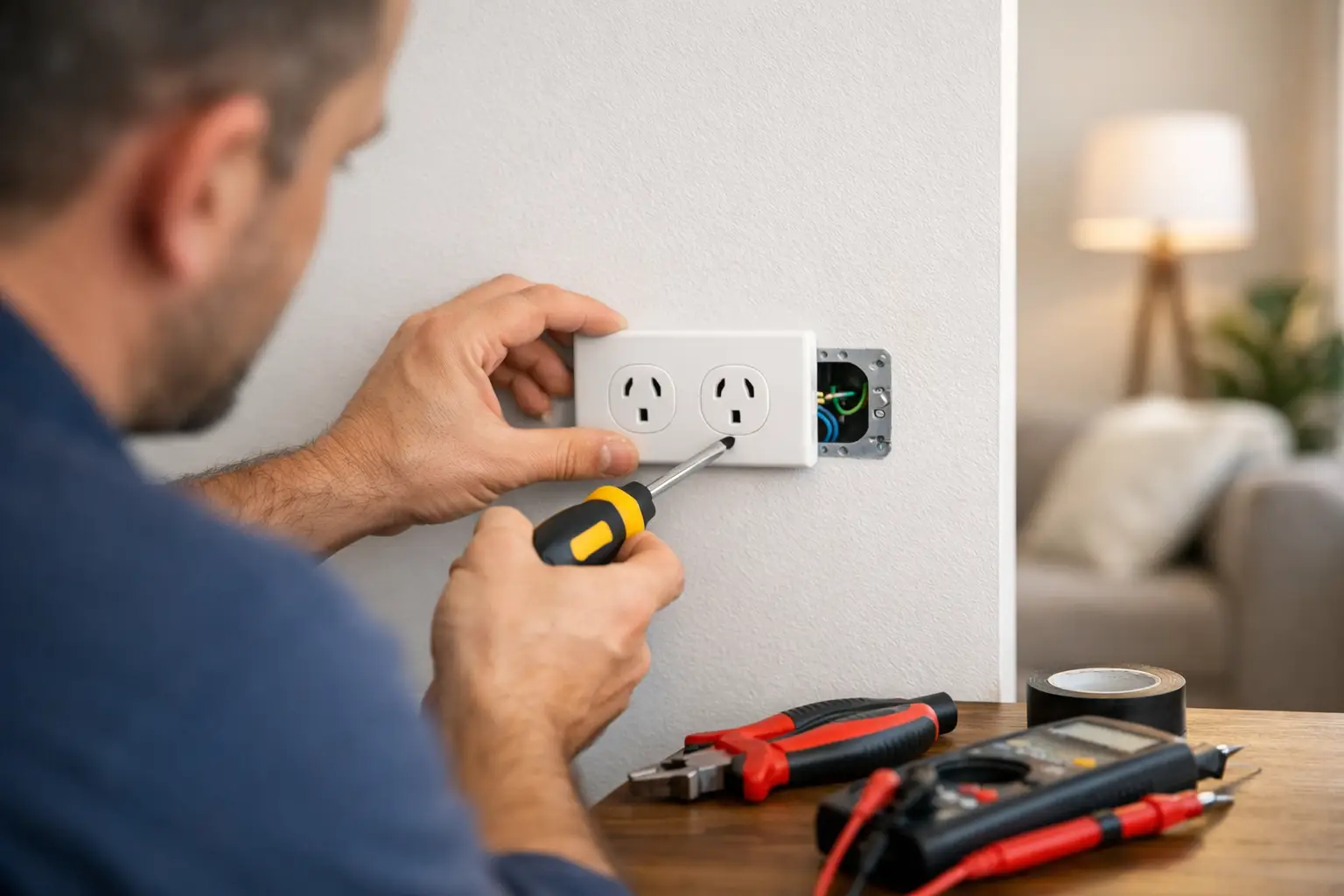
The power board behind the television, an extension lead across the study floor, a charger permanently claiming the kitchen bench. These are usually signs that a home needs more usable outlets, not more adaptors. A properly planned power point installation makes everyday living safer, tidier and far more convenient, without overloading the circuits you already rely on.
For homes across Coburg, Preston, Brunswick and wider Melbourne, the right solution is rarely just adding one outlet wherever there is an empty wall. The age of the property, the condition of the wiring, the room layout and the expected electrical load all affect what can be installed safely. A licensed electrician looks at the full picture before recommending work.
When does a home need more power points?
Older Melbourne homes were not designed around home offices, multiple smart devices, large televisions, gaming systems, electric kitchen appliances and rechargeable tools. Even newer homes can fall short once furniture is moved, a spare room becomes a study, or a renovation changes how a space is used.
Extension leads and double adaptors are fine as a temporary fix, but they should not become a permanent electrical plan. They create trip hazards, can be damaged under rugs or furniture, and encourage too many appliances to run from a single outlet. If cords are regularly stretched across a room or a power board is always full, it is worth arranging an assessment.
Common reasons to install additional power points include a new home office, kitchen upgrade, wall-mounted TV, bedroom refresh, garage workshop or outdoor entertaining area. Landlords may also need to address damaged, loose or poorly positioned outlets as part of keeping a rental property safe and functional.
Planning a power point installation
Good placement is what separates a useful installation from one that still leaves cords visible and inconvenient. Before work begins, think about where furniture will sit, how a room will be used and which appliances need reliable access to power.
In a living room, power points may be needed near the TV location, beside the sofa for lamps and chargers, and in a discreet spot for internet equipment. A home office often needs more than people expect: computer equipment, monitors, printer, mobile chargers, desk lighting and possibly data cabling all compete for access. Planning these together reduces clutter and avoids rework later.
Kitchens need extra care because high-demand appliances may require a dedicated circuit rather than simply another general outlet. The same applies to some air conditioners, ovens, dishwashers, dryers and workshop equipment. An electrician will determine the load requirements and whether the existing circuit and switchboard can support the proposed work.
Outdoor power points are another practical addition for garden equipment, lighting, water features or entertaining. They need to be weather-rated and installed for the location, with suitable protection and safe positioning. A standard indoor outlet is not a substitute for an outdoor-rated installation.
Think ahead during renovations
The easiest time to add outlets is while walls, cabinetry or flooring are already being opened during a renovation. Cable access is simpler, and you can position power where it will be needed rather than working around finished surfaces later.
If you are renovating in Brunswick, Coburg or Preston, bring electrical planning into the conversation early. It is often sensible to allow for future needs too, such as a study nook, wall-mounted screen, EV charging, additional kitchen appliances or a changing family layout. A small amount of planning now prevents patching, exposed cabling and added disruption down the track.
Choosing the right type of outlet
Not every outlet is the same. Standard double power points remain the most common option, but there are situations where a different configuration delivers a better result.
Outlets with integrated USB charging can be useful near bedsides, kitchen benches and workspaces, although they are not always necessary where modern chargers are already in use. Slimline plates create a cleaner finish in updated interiors, while surface-mounted outlets may be suitable in garages, workshops or areas where chasing cables into walls is impractical.
For television and office setups, it may also make sense to coordinate power points with data, antenna or network cabling. This provides a neater installation and avoids a tangle of leads around equipment.
The key is not to choose fittings on appearance alone. Product suitability, access, load and compliance all matter. A licensed electrician can explain the practical options in plain English before installation starts.
Check the circuit before adding more load
A new outlet may be physically straightforward to fit, but that does not mean the circuit behind it has unlimited capacity. Power points are connected to circuits that must be correctly protected and sized for their intended use. Adding outlets to an already heavily used circuit can create nuisance tripping, overheating risks or unreliable operation.
This is particularly relevant in established homes with older wiring, ceramic fuses, ageing switchboards or limited circuit separation. If lights dim when appliances start, breakers trip regularly, outlets feel warm, or there are signs of damage, these are reasons to have the electrical system inspected rather than simply fitting another power point.
In some cases, a switchboard upgrade, safety switch improvement or new circuit is the better long-term answer. It depends on the condition of the installation and the equipment you plan to run. A careful assessment may identify an issue early, before it becomes an inconvenient or costly fault.
Why power point work must be done by a licensed electrician
Electrical work is not a DIY job. Power point installation involves fixed wiring and must be completed by a licensed electrician in line with Australian electrical safety requirements. The work should be tested after installation, with the appropriate certification provided.
Hiring a professional protects more than the appearance of the finished outlet. It ensures cables are correctly routed, connections are secure, circuits are suitably protected and the installation is safe for the people using the property. This matters especially in homes with children, older wiring, rental properties and areas exposed to moisture.
A qualified electrician can also identify issues that are not visible from the wall plate, such as deteriorated insulation, poor previous workmanship, overloaded circuits or inadequate earthing. These are not details to leave to chance.
Getting the most value from the visit
If you have several small electrical jobs, it is often more efficient to organise them together. Additional power points can be installed while addressing a faulty outlet, replacing old light fittings, adding smoke alarms, connecting an appliance or assessing switchboard capacity.
Before the electrician arrives, make a quick note of where you use extension leads, which outlets are unreliable and where furniture or appliances will sit. Clear information allows for a more accurate recommendation and reduces surprises once work is underway.
A well-placed power point is a small change that can make a room work better every day. If your home has run out of convenient, safe access to power, arrange professional advice before another extension lead becomes the permanent solution.
Get in touch
Need more power points?
Ring for the quickest response. If it is easier to write it down, this comes straight through to Maz.
- Call or text
- 0492 949 017
- Based in
- Coburg VIC 3058
- Licence
- REC 35681